
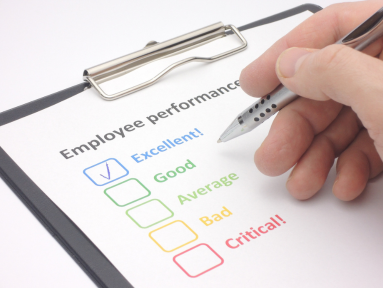
At Taysir Bridge, we do more than screen CVs. Our core value is deep understanding. We partner with your department to diagnose its specific needs, then design, sort, and filter the most effective assessments so every hiring decision delivers the best mentality-to-role match.
Hiring the right person isn't only about skills. It's about mentality. When HR aligns mindset, clear policy, and targeted assessment, departments get people who perform faster, stay longer, and lift the whole team's outcomes. Here is a straightforward playbook you can put to work today.
Why Mentality Matters More Than You Think
Skills can be taught. Mentality (work style, decision patterns, motivation) often can't. A salesperson with low resilience won't thrive in a quota-driven team, just as a creative engineer who dislikes structure will clash in a regulated environment. The first step is to define the "mental fit" for each department, then design hiring to test for it.
Step 1 — Define Each Department's Mentality
Create short profiles for each department with 4 to 6 must-have behaviours and 2 to 3 nice-to-haves. A few examples:
- Sales: high-drive, resilience, competitive, persuasive. Nice-to-have: consultative mindset.
- Finance: detail-oriented, risk-aware, process-driven, ethical. Nice-to-have: strategic curiosity.
- Engineering: curiosity, autonomy, systems-thinking, focus. Nice-to-have: collaborative mentorship.
- Customer Success: empathy, problem-solver, relationship-focused, proactive. Nice-to-have: product advocacy.
Step 2 — Build Your HR Policy Foundations
Put guardrails in place so hiring consistently tests for mentality, not just credentials:
- Role taxonomy and competency frameworks.
- Mandatory hiring steps and clear owners (who approves, who interviews).
- Onboarding milestones tied to behavioural indicators at 30, 60, and 90 days.
- Performance review rubrics mapped to competencies.
- Assessment governance: approved tools, data privacy, and validity checks.
Step 3 — Map Assessments to Mentality
Choose tests that reflect each departmental profile:
- Cognitive and ability tests for analytical departments such as Finance and Operations.
- Situational Judgement Tests (SJTs) to surface decision priorities in Customer Success, HR, and Sales.
- Personality and behaviour inventories for work-style fit across all departments.
- Role-specific technical tasks or coding exercises for Engineering and Product.
- Structured behavioural interviews (STAR) tied to department competencies.
- Work-sample tests or short paid trials for real-world validation.
Step 4 — Build a Clear Assessment Blueprint
Standardise the hiring funnel so every candidate is measured fairly:
- Screening: resume plus an automated cognitive test.
- Deep-screen: technical test plus SJT.
- Behavioural fit: structured interview plus personality inventory.
- Final validation: work-sample or manager panel with a decision rubric.
Step 5 — Score With Rules, Not Gut Feeling
Use weighted scores and clear cutoffs to keep decisions consistent and defensible:
- Example weighting: 40% behavioural fit, 30% technical, 20% cognitive, 10% culture and values.
- Set minimums for critical dimensions (for example, behavioural fit must meet a defined threshold).
- Use interview rubrics to reduce bias and increase consistency between interviewers.
Step 6 — Implement and Validate
Turn policy into everyday practice:
- Workshop the competency profiles with your hiring managers.
- Pilot assessments with your current top performers to validate questions and cutoffs.
- Integrate the tools into your ATS and train your interviewers.
- Track outcomes at 30, 60, 90, and 180 days, then iterate.
The Metrics That Prove It Works
Measure the business impact, not just the activity:
- Time-to-productivity at 30, 60, and 90 days.
- Retention at 6 to 12 months.
- New-hire performance versus expectations.
- Hiring manager satisfaction.
- Predictive validity: the correlation between assessment scores and actual performance.
A Quick Governance Checklist
- Document competency standards for every department.
- Mandate minimum assessment steps in your hiring policy.
- Appoint an assessment owner and run a quarterly review.
- Ensure legal compliance and a clear candidate feedback process.
How Taysir Bridge Puts This Into Practice
This is exactly how we work with our clients across Dubai and the UAE. Before we send a single CV, we sit with your team to understand the mentality each role really demands, then build a structured, fair evaluation around it. The result is fewer mis-hires, faster time-to-productivity, and people who stay. It is also why every placement we make is backed by a one-year replacement guarantee.
Ready to hire for mentality, not just CVs?
Book a free consultation with our recruitment and HR consultancy team in Dubai, and we'll help you map the right assessment blueprint for your departments.