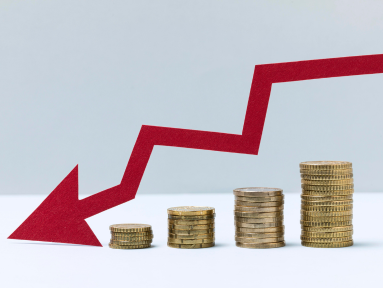
The Paradox of Crisis: Why Employee Turnover Falls When the Economy Does
بقلم Taysir Bridge
13 أبريل 2026
7 دقائق للقراءة
Ask most business leaders what happens to staff turnover when an economy contracts, and they will predict it rises, stressed employees, dissatisfied teams, and people searching for something better. The data tells a completely different story.
When economies struggle, employees stop leaving. Not because they suddenly love where they work, but because the world outside feels far more dangerous than the one they know. Understanding why this happens and what it really signals is one of the most strategically important questions a UAE employer can ask right now.
A Pattern That Repeats Every Crisis
This is not a new or localised trend. It has shown up, reliably, across every major economic shock of the past two decades.
The 2008 Financial Crisis
Analysis of U.S. Bureau of Labor Statistics JOLTS data reveals a consistent pattern: rates of voluntary separation from employers did not rise during the 2007–2009 recession. Increased unemployment was driven almost entirely by employer-initiated layoffs, not by employees choosing to leave. Those who kept their jobs held on tightly, because unemployment in a collapsing market was a far more terrifying prospect than a frustrating role. COVID-19, 2020
The pattern returned with sharper clarity. According to the Congressional Research Service's JOLTS analysis, the number of workers voluntarily quitting their jobs fell to 2.1 million in April 2020, down from 3.6 million in January 2020, while layoffs reached the highest level ever recorded in the data series. Voluntary turnover dropped 50% in a matter of weeks. Workers were not jumping ship. They were gripping the rails. The "Great Stay", 2023–2025
The most recent cycle confirms the same logic. The average employer turnover rate dropped to 18% in 2024, down sharply from 26% in both 2022 and 2023. Economists have labelled this the "Great Stay," a period of historically low voluntary movement driven, again, not by satisfaction, but by caution.
Three separate crises. The same workforce behaviour every time. The cause is not loyalty, it is fear of the unknown.
Why This Effect Is Even More Pronounced in the UAE
In markets like Dubai and across the GCC, the crisis-retention dynamic carries an additional layer that most global HR research overlooks: visa dependency.
With expatriates making up approximately 89% of the UAE's population and the vast majority employed on employer-sponsored visas, the stakes of voluntary resignation are categorically higher here than in other markets. Leaving a job in Dubai does not just mean losing an income; it can mean losing your legal right to remain in the country, triggering visa cancellation within 24–48 hours of termination paperwork being filed, and in some cases requiring an immediate exit. For employees supporting families, servicing mortgages, or sponsoring dependents' visas, the calculus of leaving becomes far more consequential. UAE labour law reforms since 2021 have reduced some barriers to mobility, but economic uncertainty still amplifies the emotional and financial cost of changing employers significantly.
The result: during a downturn, UAE employees are among the most retention-stable workforces in the world and among the most potentially disengaged, for the same reasons.
Four Forces Driving Crisis-Era Retention
1. Economic Uncertainty Kills the Confidence to Leave
When job postings dry up and hiring freezes spread across industries, the decision to resign shifts from a calculated risk to a genuinely dangerous one. Financial security becomes every employee's primary concern. Even a frustrating, poorly managed role feels safer than unemployment. The job market stops looking like an opportunity; it starts looking like a threat.
2. Risk Aversion: "Better the Devil You Know."
Employees who might have casually browsed new opportunities in a booming market become acutely aware of a hard truth: at a new company, they are almost always the most recent hire and the first to go if further cuts are needed. The fear of being "last in, first out" anchors workers to their current employer regardless of how they feel about the role, the manager, or the culture.
3. Benefits as a Lifeline
This factor is consistently underestimated. According to Willis Towers Watson's Global Benefits Attitudes Survey, employees are turning to their current employers for a sense of security amid cost-of-living pressures, inflation, and geopolitical uncertainty. Health insurance, pension contributions, and accrued entitlements benefits workers rarely thought about in a booming market become impossible to surrender. In a region where employer-provided health cover is often tied directly to visa sponsorship, this effect is amplified further. 4. Limited Opportunities Close the Exit Door
Even employees actively wanting to leave often find they simply cannot. Reduced job postings, industry-wide hiring freezes, and sharply increased competition for every available position collectively narrow the options. In the UAE, where recruitment cycles can be swift in a healthy market, a downturn dramatically changes the ratio of candidates to available roles, particularly at mid and senior levels.
The Hidden Risk: When Stability Is Built on Fear
Here is the part most employers miss entirely. Low turnover and a healthy workforce are not the same thing.
When employees stay because they are afraid to leave, the organisation retains their physical presence but often loses their discretionary effort, creativity, and genuine commitment. Disengaged employees who are "stuck" do not innovate. They do not go the extra mile. They wait for conditions to improve, and when they do, they leave often in waves and often taking institutional knowledge with them.
According to Gallup, 51% of employees are actively watching for or seeking new job opportunities, the highest self-reported intent since 2015. Low turnover numbers today can mask a significant retention crisis tomorrow.
What This Means for Employers, Employees, and Long-Term Loyalty
For Employers
Crisis-era retention is a genuine strategic window, but only if you use it deliberately. Lower voluntary turnover creates space to assess your workforce honestly, invest in high-potential employees, and build the cultural foundations that genuine loyalty requires. This is exactly where structured HR consultancy adds measurable long-term value: helping organisations distinguish between employees who are engaged and those who are simply staying because they have nowhere else to go right now. For Employees
A period of enforced stability, while uncomfortable, is also a genuine opportunity. Upskilling, building internal credibility, and reassessing long-term career direction are all more accessible during a downturn than during a period of rapid market movement. Employees who invest in their own development during this window are consistently the ones best positioned when conditions improve.
For Long-Term Loyalty
The most important data point of all: WTW's 2024 survey found that while 72% of employees are currently staying, only 11% would turn down an unsolicited job offer, down from 25% in 2022. The workforce is stable. It is not loyal. When the market recovers, organisations that did nothing with this window will face a talent exodus they did not see coming.
Is your workforce stable or just stuck?
If your organisation is seeing unusually low turnover right now, the right question is not "how do we maintain this?" It is "Why are people really staying?" Fear-based retention erodes culture, suppresses performance, and sets the stage for a costly wave of departures the moment the market opens. Speak with Taysir Bridge to assess whether your workforce stability is built on genuine engagement or on risk avoidance that will unwind the moment the market improves. Frequently Asked Questions
Q: Why does employee turnover go down during a recession?
Because leaving feels riskier than staying. When job postings dry up and hiring freezes spread, even a frustrating role feels safer than unemployment. In the UAE, visa dependency makes this effect even stronger changing employers carries real legal and financial consequences.
Q: Is low employee turnover during a crisis a sign of a healthy workplace?
Not automatically. Low turnover during a downturn often reflects fear, not loyalty. Gallup data shows over 51% of employees are actively watching for new opportunities even while staying put meaning today's stable numbers can mask tomorrow's resignation wave.
Q: What should UAE employers do when turnover is low during a downturn?
Use the window strategically not passively. Assess who is genuinely engaged versus who is simply waiting for a better opportunity. Build your HR foundations now, so you retain the right people when the market recovers. Speak to our HR consultancy team.